Exploring how repeated behaviours and environmental patterns shape our everyday relationship with food and eating decisions.
Welcome to TheHabitCircle, an independent informational resource dedicated to exploring the fascinating intersection of daily habits, nutritional patterns, and their general relationship to body weight science. This site presents educational content grounded in behavioural research and observational studies.
Explore Our Insights
Neutral exploration of behavioural science in nutritional contexts.
TheHabitCircle exists to provide clear, evidence-based explanations of how daily routines, environmental cues, and automatic behaviours interact with food choices and eating patterns. We present research findings and conceptual frameworks in an accessible, non-prescriptive manner. This is a place to learn, not to receive personalised recommendations.
We explain concepts, describe phenomena, and provide scientific context without offering personal guidance or prescriptive solutions.
Content draws from behavioural studies, population-level observations, and established physiological knowledge of habit formation.
TheHabitCircle is an informational hub with no commercial services, products, or individual support offerings attached.
Educational content only. No promises of outcomes.
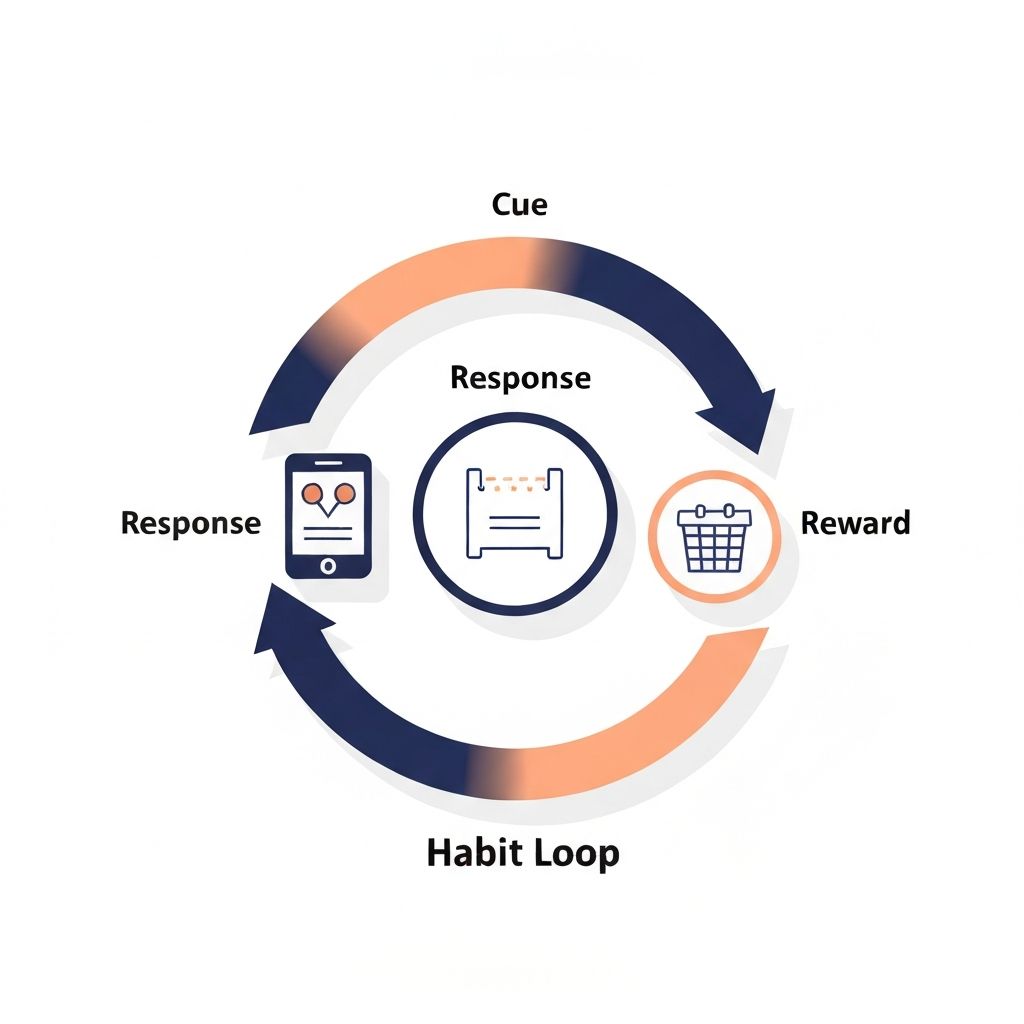
Understanding the circular structure of automatic behaviours.
Habit formation follows a consistent pattern: a cue triggers an automatic response, which leads to a reward. Over time, this loop becomes ingrained in daily behaviour. In eating contexts, cues might include time of day, environmental surroundings, or emotional states. The response is the habitual food choice, and the reward is the immediate sensory or emotional satisfaction.
This cycle repeats thousands of times, creating automaticity—the ability to execute a behaviour with minimal conscious thought. Understanding this loop is central to comprehending how daily routines shape nutritional patterns across populations.
How structured daily schedules influence overall food intake.

Structured routines create predictable patterns in food intake. People with consistent meal times, established breakfast habits, or regular snack schedules tend to develop automatic food-related behaviours tied to these time blocks. The structure itself becomes a powerful cue.
Research on daily patterns shows that routine consistency influences overall energy consumption in populations. When meals are scheduled, locations are familiar, and sequences are habitual, food decisions require less conscious deliberation. This automaticity can be observed across demographic groups and cultural contexts.
Understanding these patterns helps explain general population-level trends in eating behaviours without making claims about individual outcomes.
How surroundings shape automatic eating behaviours.
The arrangement of food in your environment serves as a constant cue. Visible fruit bowls, accessible snacks, or coffee machines create automatic reaching-for-food responses. Conversely, foods kept out of sight require conscious retrieval—adding a small barrier to automatic consumption.
Specific locations become associated with eating. A kitchen counter, favourite chair, or desk workspace can trigger habitual food-related responses simply by being present in that space. These environmental associations develop through repeated pairing over time.
Time of day, presence of others, and social rituals act as powerful cues for eating. Certain times trigger automatic meal-seeking, and shared routines create synchronized eating patterns across groups.
Sight, smell, and sound of food preparation activate automatic consumption urges. These sensory cues bypass deliberate decision-making, creating automatic responses rooted in physiological and neurological pathways.
The development of habitual food responses.
Automaticity describes the process by which behaviours become automatic through repeated execution. Eating decisions that initially required conscious deliberation—choosing a breakfast item, deciding on a snack—eventually require minimal cognitive effort. This is neither good nor bad; it's a fundamental property of habit formation.
The development of automaticity in eating follows predictable neuroscientific principles. Neural pathways strengthen through repetition. Cues become increasingly salient. Rewards reinforce the loop. Over weeks and months of consistent repetition, food-related decisions move from conscious deliberation to automatic execution.
Understanding this process without judgement allows us to appreciate how daily eating patterns emerge naturally from environmental structure and repeated routine.
General patterns observed in UK behavioural studies.
Behavioural studies across UK populations reveal consistent patterns: people with structured daily routines show more consistent eating patterns; environments with visible healthful options correlate with different intake patterns than environments with visible high-calorie options; automated meal timing creates less variable energy consumption across days.
These observations emerge at the population level—they describe general trends without claiming universal application to individuals. Variation remains substantial. Contexts differ. Responses vary. Yet overall patterns are statistically observable.

The relationship between habitual patterns and physiological feedback.

Consistent daily eating patterns create stable physiological conditions. The body responds to regular patterns with predictable metabolic feedback. This consistency itself becomes a variable in overall energy balance.
Repeated actions generate repeated physiological responses. The body adapted to consistent intake develops different metabolic indicators than bodies experiencing highly variable intake. This is observational science—describing what occurs in systems with consistent versus variable input patterns.
Understanding how repetition and consistency influence physiological markers helps explain general population-level trends without making individual promises or prescriptions.
Explore our collection of in-depth articles.
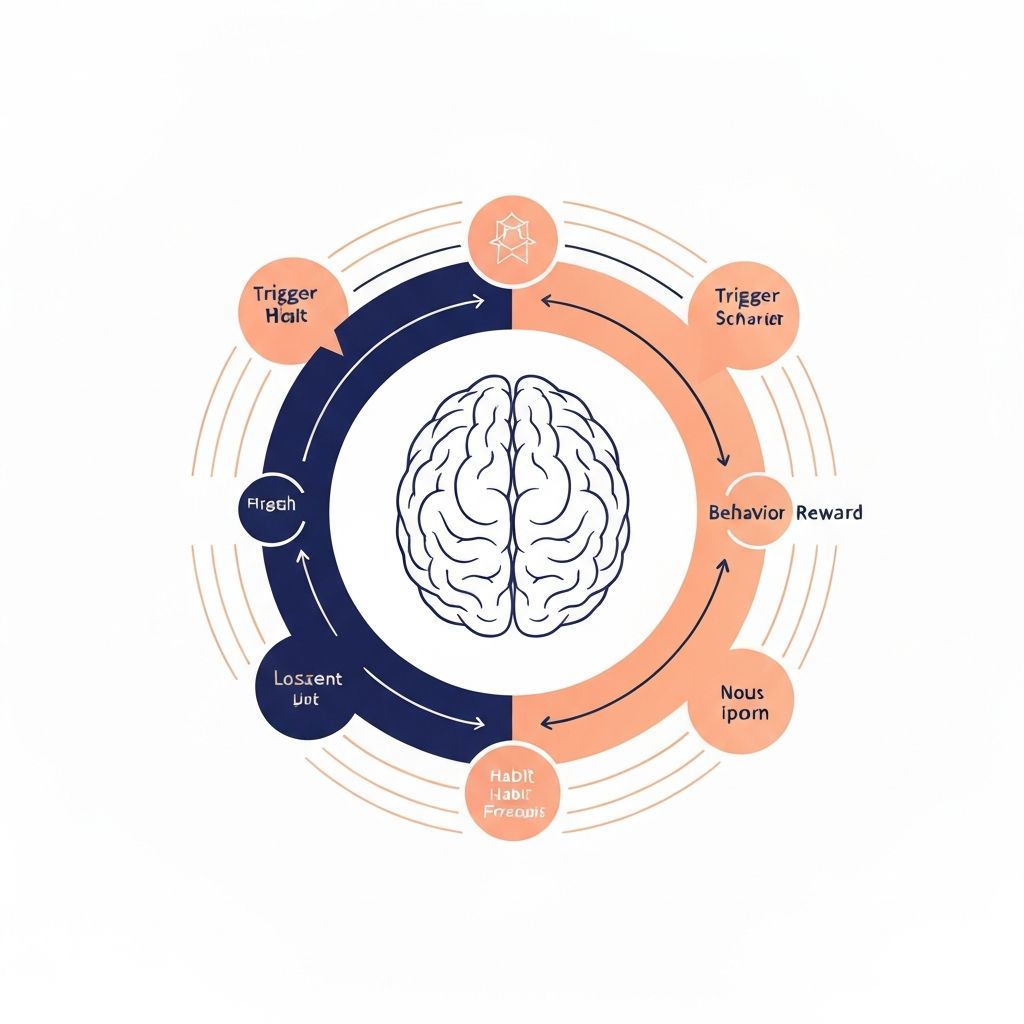
Explore the brain mechanisms underlying automatic behaviour development and neural pathway strengthening.
Read More
Discover how kitchen design, visibility of foods, and spatial arrangement shape automatic eating choices.
Read More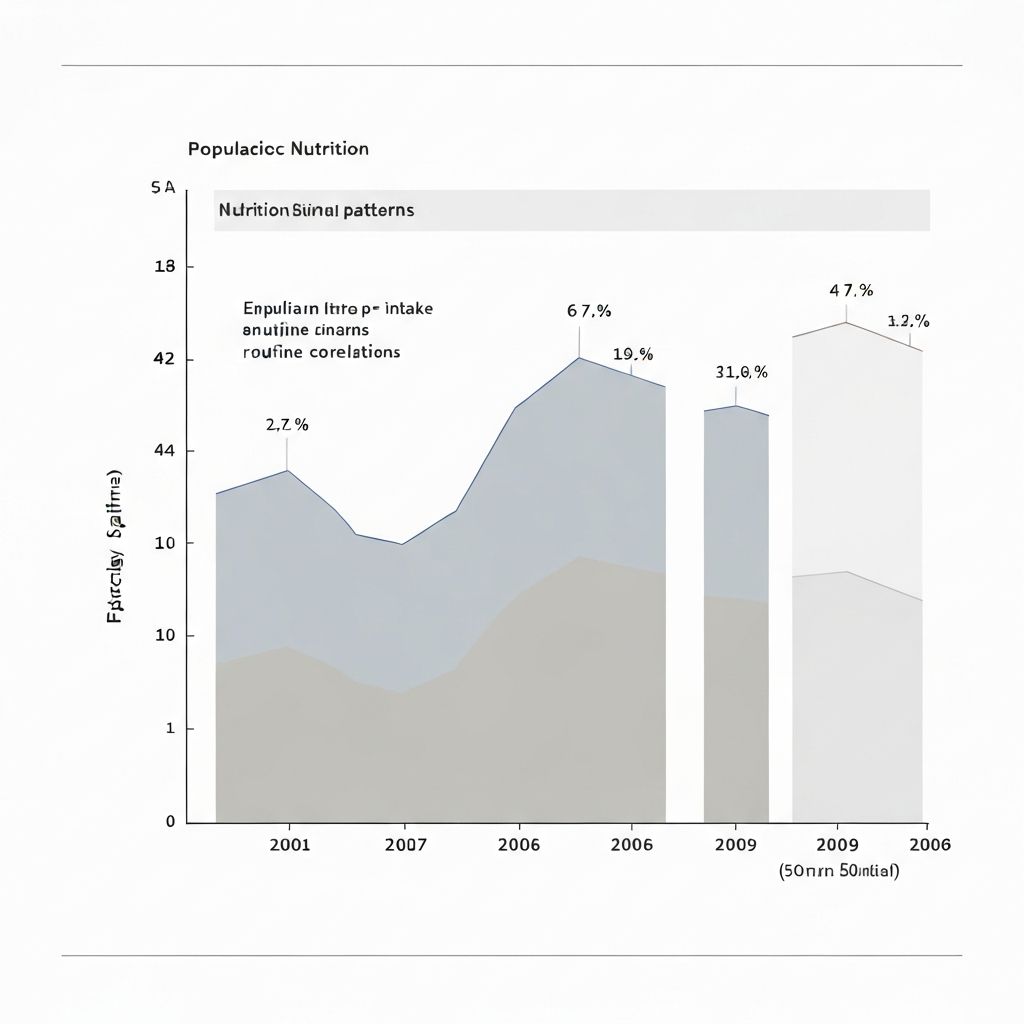
Review observational data on how consistent daily schedules correlate with overall energy consumption patterns.
Read MoreAddressing common questions about habits and nutrition.
Knowledge builds through curiosity and continued learning.
TheHabitCircle exists as a knowledge resource for those interested in understanding the science behind daily habits and their role in nutritional patterns. Visit our blog for deeper explorations of specific topics, or contact us with questions.
View All Insights TheHabitCircle